


In an industry saturated with established competitors, the new Jetour Dashing stands out not just with its distinctive appearance, but also with a suite of impressive engineering tech.
Under the broad grille and contoured body, there is a new engine architecture and superior system integration intended to fulfill the needs of both urban driving and long-distance, which by the way, is being pushed in Nigeria.
The five-seater crossover, which has lately joined the Nigerian auto market, is attracting attention from both urban and long-distance drivers, posing a new threat to established manufacturers in one of the industry’s most competitive categories.
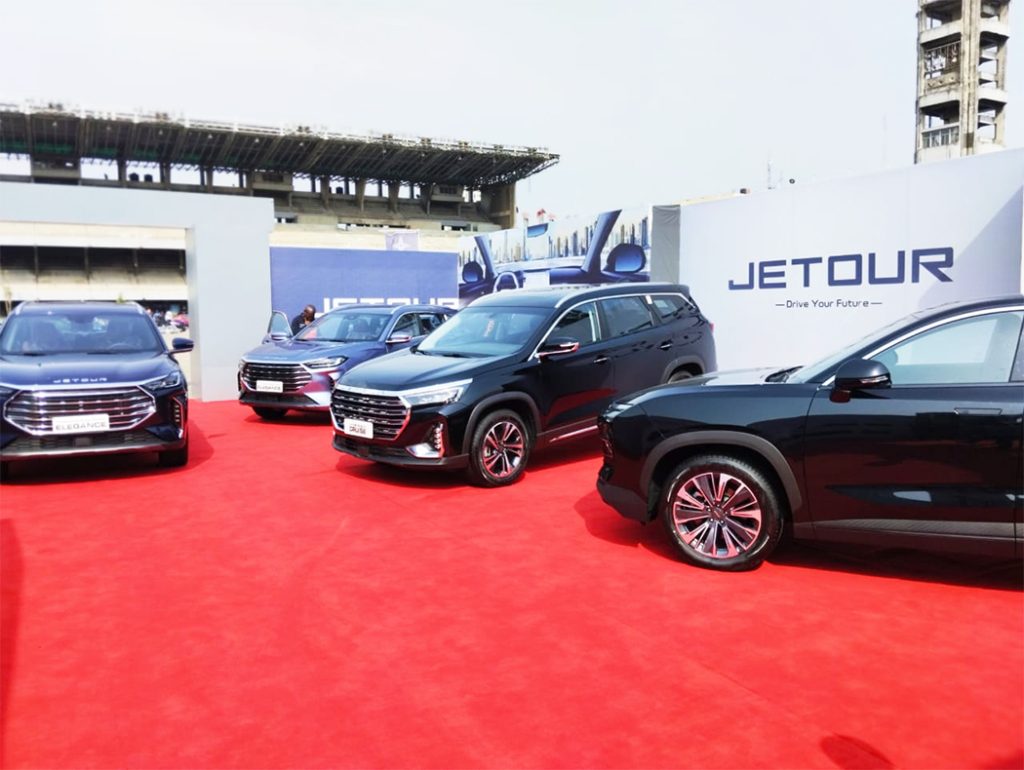
According to a company release, seen in the Punch, the Jetour Dashing has a confident appearance, with a broad grille, sculpted body lines, and slick LED lighting that give it a bold road presence.
Its aerodynamic shape and forceful front fascia make it stand out on city streets and wide highways.
Inside, the SUV has a sleek and well-appointed interior. A panoramic sunroof adds to the sensation of room, while a sleek, technology-focused dashboard revolves around a 15.6-inch touchscreen that supports Apple CarPlay and Android Auto, ensuring smooth connectivity and straightforward operation.
Idea behind the design
Fundamentally, the Dashing’s engineering begins with the turbocharged engine choices.
Both the 1.5-litre and 1.6-litre turbocharged four-cylinder engines are small by historical standards, but they provide power comparable to bigger normally aspirated engines, up to 145 kW (197 hp) and 290 Nm of torque.
See here: Terra Industries: A look into the $11 billion gamble to shield Africa
This follows a larger automotive trend known as “engine downsizing,” in which decreased displacement is compensated for by forced induction to provide power and efficiency.
According to research, turbocharging paired with downsizing can allow engines to attain torque and power curves equivalent to bigger engines while boosting fuel efficiency by around 20-30% when compared to larger normally aspirated versions.
Imagine you have two cars.
One car has a big engine, like a Toyota Camry. It’s known for being strong and smooth because its engine is larger.
The other car has a smaller engine, closer in size to what you’d find in a Toyota Corolla.
Now here’s where turbocharging comes in.
A turbo is like a helper that pushes extra air into the small engine so it can burn fuel better and make more power.
Because of the turbo, that small Corolla-sized engine can feel almost as strong as the bigger Camry-sized engine when you press the accelerator. It can speed up quickly for things like overtaking another car on the highway, not like a race car, such as a Porsche 911, but strong enough to feel confident and smooth in everyday driving.
However, the engine is only part of the story.
The Dashing’s gearbox is equipped with a dual-clutch transmission (DCT), which is a significant engineering decision.
To control power flow between the engine and transmission, traditional automatic transmissions include a torque converter.
In contrast, a DCT has two separate clutches, one for odd-numbered gears and the other for even-numbered gears.
This architecture enables the next gear to be pre-selected while the current gear is still engaged, resulting in quicker and smoother changes than conventional automatics since power flow is never interrupted.
