


Aliko Dangote, Africa’s richest man, wants to transplant one of Africa’s most successful manufacturing industries, large-scale oil refining, to East Africa, with the Kenyan city of Mombasa emerging as his favorite location for a potential $15 billion to $17 billion refinery project.
The Nigerian tycoon has revealed that Kenya is now leading the race to host the projected 650,000 barrels-per-day refinery, which would be on the same scale as his iconic Dangote Refinery in Lagos, the world’s largest single-train refinery.
At its core, the project is a manufacturing play, one aimed at increasing East Africa’s industrial capability by converting crude oil into finished petroleum products closer to home, rather than relying largely on imports from other countries, the Punch reports
The Nigerian billionaire believes Kenya’s attraction stems from its larger consumer market and the strategic advantages of Mombasa’s deep-water port, which would ease crude imports and gasoline exports throughout the region.
If constructed, the refinery will process oil from Uganda and other suppliers, reducing East Africa’s long-standing reliance on imported fuel, a problem that has become even more pressing in light of recent global supply interruptions caused by Middle Eastern tensions.
The idea also reflects a broader industrial trend: African billionaires are increasingly investing in manufacturing infrastructure capable of changing regional supply networks.
However, Dangote has stated unequivocally that government support, including safeguards against cheap imported fuel, will be critical to making the plant commercially viable.
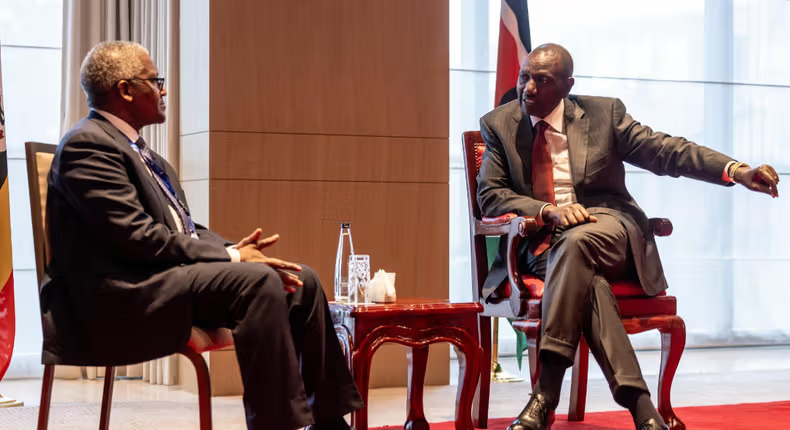
Landing the refinery would be more than just a significant investment for Kenya.
It would establish the country as East Africa’s refining and manufacturing hub, while also cementing Dangote’s burgeoning reputation as one of the continent’s most ambitious industrial developers.
An earlier report showed that Dangote supported the construction of a large-scale oil refinery in Tanzania.
The proposed project, which was slated for the coastal city of Tanga, Tanzania, was projected to function as a major downstream processing hub for East Africa.
Additionally, it was intended not just as a national facility, but also as a regional industrial asset linked to Mombasa by pipeline, resulting in a cross-border energy corridor aimed at boosting fuel distribution efficiency across different economies.
