

Close Menu
Compass Nigeria

    Subscribe to Updates

    Get the latest creative news from FooBar about art, design and business.

    What's Hot

    REPLIQA: Google launches $10M push to merge quantum computing and biology

    May 12, 2026

    UK aerospace sector scales production as aircraft deliveries rise

    May 12, 2026

    DuPont named co-winner of IRI innovation culture award

    May 12, 2026
    Facebook X (Twitter) Instagram
    Compass NigeriaCompass Nigeria Tuesday, May 12
    • Send us an email
    Facebook X (Twitter) Instagram LinkedIn
    • Homepage
    • About us
    • News

      REPLIQA: Google launches $10M push to merge quantum computing and biology

      May 12, 2026

      As the space race heats up, China delivers its new robotic cargo spaceship

      May 11, 2026

      Africa’s vehicle industry deepens as Morocco receives $1.8 million for another vehicle plant

      May 11, 2026

      Egypt bets on smart, green manufacturing to boost global industrial edge

      May 11, 2026

      Asia’s manufacturing sector feels the heat as middle east tensions disrupt trade

      May 11, 2026
    • Features
    • Contact
    Compass Nigeria
    Email us
    Home » Finally, humanity heads to the moon again after 54 years via NASA’s Artemis II
    Features

    Finally, humanity heads to the moon again after 54 years via NASA’s Artemis II

    Ned NwosuBy Ned NwosuApril 3, 2026No Comments3 Mins Read6 Views
    Facebook Twitter Pinterest Telegram LinkedIn Tumblr Copy Link Email
    Follow Us
    Google News Flipboard
    Share
    Facebook Twitter LinkedIn Pinterest Email Copy Link

    NASA’s Artemis II project has officially begun its voyage beyond Earth’s orbit, to carry humans around the Moon for the first time since 1972. 

    The Orion spacecraft completed a vital engine burn that set it on course for the Moon, a significant milestone in the mission.

    The five-minute, 55-second fire, known as the translunar injection (TLI), propelled the spacecraft out of Earth’s orbit. 

    NASA reported that the maneuver went “flawlessly,” putting the astronauts on a looping path that will lead them around the far side of the Moon and back to Earth.

    NASA’s Artemis II begins historic lunar journey
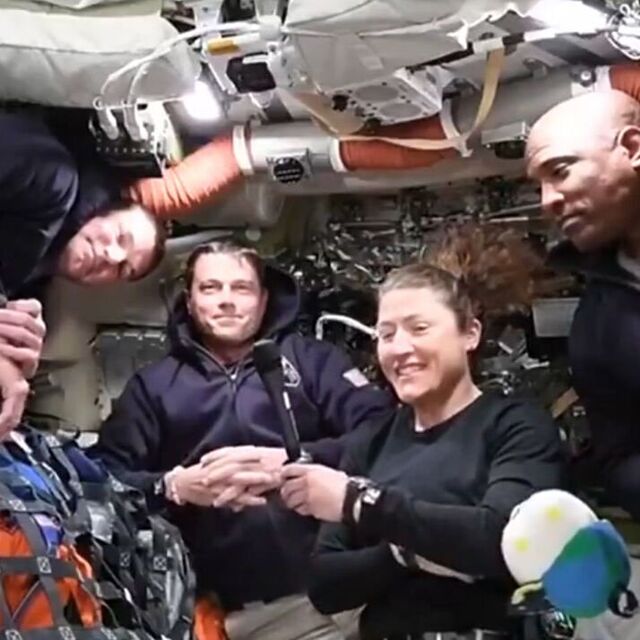
    From within the Orion capsule, the crew reported a powerful and sustained shift as the spacecraft gained speed. 

    Canadian astronaut Jeremy Hansen, the first non-American assigned to a lunar mission of this kind, stated that the team was in good shape and focused as they began their voyage.

    “Humanity has once again shown what we are capable of,” he said. 

    “It’s your hopes for the future that carry us now on this journey around the Moon,” he added. 

    With this maneuver completed, Artemis II is now on a wide, looping path that will take her around the far side of the Moon before returning to Earth. 

    The mission marks the first time humans have flown beyond low Earth orbit since the Apollo period, with the previous excursion taking place in 1972, BBC reports. 

    As Orion progresses deeper into space, pictures from the spaceship show Earth progressively receding in the distance, a stark reminder of how far the crew has already traveled. 

    Engineering milestones and mission trajectory of the Artemis II
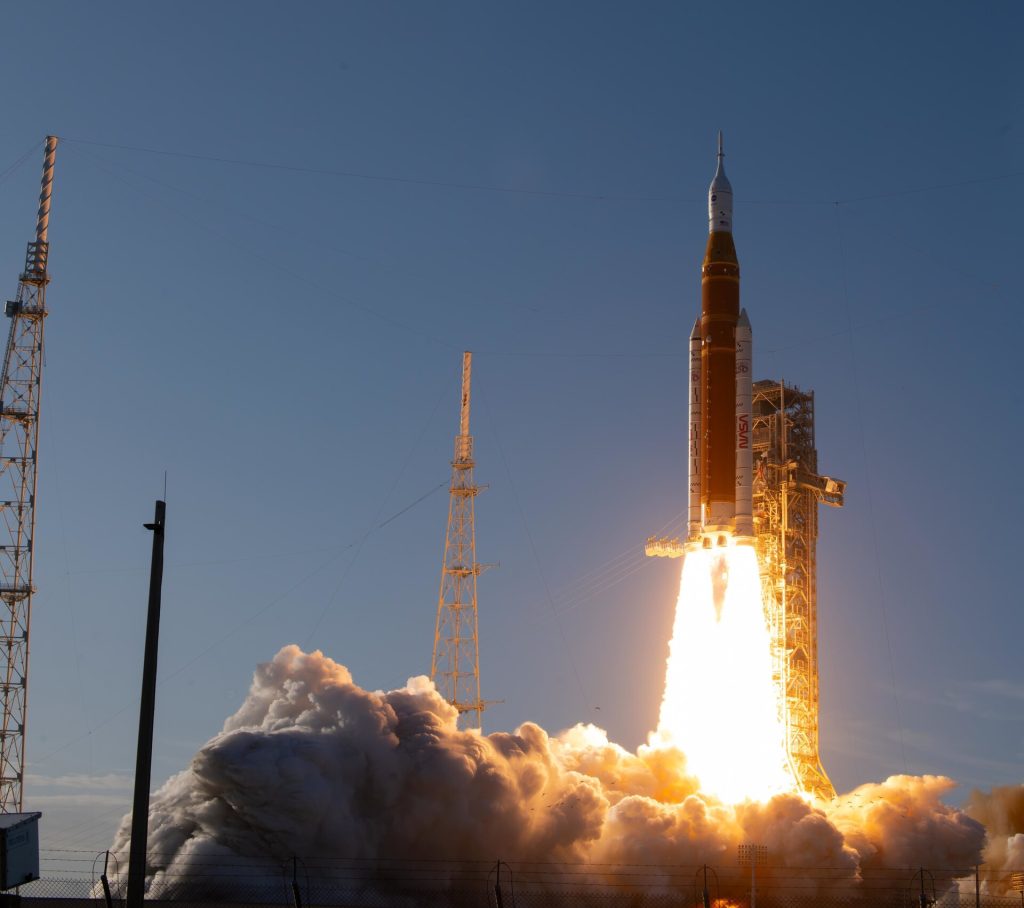
    Before committing to the lunar course, the spacecraft spent nearly a day in an extended orbit around Earth, allowing engineers to test the propulsion, navigation, and life-support systems.

    The engine burn was carried out by Orion’s service module, which produced a sustained push, considerably increasing the spacecraft’s velocity. 

    This boost will propel the crew farther than any previous human mission, potentially beating the distance record set by the Apollo 13 mission in 1970 by more than 4,700 miles (7,600 kilometers) beyond the moon, depending on final trajectory changes.

    See here: Egypt puts home-built satellite into orbit as local aerospace manufacturing gains momentum

    Despite the commitment to a lunar path, mission controllers have added layers of freedom. In the early stages of the journey, it is still possible to turn back and return to Earth fast if necessary. 

    In the first 36 hours following the burn, a quick turnaround remains the best option in the event of a significant problem. 

    Beyond that window, it may be more efficient to continue around the Moon and use its gravity to return home.

    Artemis II is more than just a technological mission; it represents humanity’s fresh push into deep space. As the spacecraft continues its trip, it transports not only its passengers but also the hopes for a new era in lunar exploration.

    Artemis II Lunar Mission NASA
    Follow on Google News Follow on Flipboard
    Share. Facebook Twitter Pinterest LinkedIn Telegram Email Copy Link
    Ned Nwosu

    Related Posts

    Africa’s richest man picks Kenya instead of Tanzania to replicate his Nigerian refinery success story worth $17 billon

    May 11, 2026

    €20 billion Africa-Europe tunnel projects could transform manufacturing and trade

    May 8, 2026

    Solar-Powered sips: How Coca-Cola is rewriting the industrial playbook in Kenya

    April 27, 2026
    Leave A Reply Cancel Reply


    The reCAPTCHA verification period has expired. Please reload the page.

    Recent Posts

    • REPLIQA: Google launches $10M push to merge quantum computing and biology
    • UK aerospace sector scales production as aircraft deliveries rise
    • DuPont named co-winner of IRI innovation culture award
    • As the space race heats up, China delivers its new robotic cargo spaceship
    • Africa’s vehicle industry deepens as Morocco receives $1.8 million for another vehicle plant
    Stay In Touch
    • Facebook
    • Twitter
    • Pinterest
    • Instagram
    • YouTube
    • Vimeo

    Subscribe to Updates

    Get the latest creative news from SmartMag about art & design.

    About Us
    About Us

    Compass Nigeria

    Facebook X (Twitter) Instagram LinkedIn
    News

    REPLIQA: Google launches $10M push to merge quantum computing and biology

    May 12, 2026

    As the space race heats up, China delivers its new robotic cargo spaceship

    May 11, 2026

    Africa’s vehicle industry deepens as Morocco receives $1.8 million for another vehicle plant

    May 11, 2026
    Features

    Africa’s richest man picks Kenya instead of Tanzania to replicate his Nigerian refinery success story worth $17 billon

    May 11, 20265 Views

    €20 billion Africa-Europe tunnel projects could transform manufacturing and trade

    May 8, 20261 Views

    Solar-Powered sips: How Coca-Cola is rewriting the industrial playbook in Kenya

    April 27, 20268 Views
    • Homepage
    • News
    • Features
    • Get In Touch
    • Privacy Policy
    • Cookie Policy
    Compass Nigeria © 2026. All right reserved.

    Type above and press Enter to search. Press Esc to cancel.